
At a glance
- UHMWPE’s dense molecular structure resists heavy abrasion and friction, cutting surface wear in mining, quarrying, and waste operations.
- Its energy-absorbing chains flex under impact to prevent cracking or deformation from repeated loads.
- Fleets experience less maintenance, reduced downtime, and longer truck body life compared to steel, rubber, or aluminium liners.
Ultra-High Molecular Weight Polyethylene (UHMWPE) is a high-performance polymer engineered for environments where metal and conventional liners struggle to last. It features long molecular chains and a dense structure that delivers outstanding mechanical strength, toughness, and self-lubricating properties.
These traits directly translate to two critical performance areas for tipper and haulage fleets: wear resistance and impact resistance.
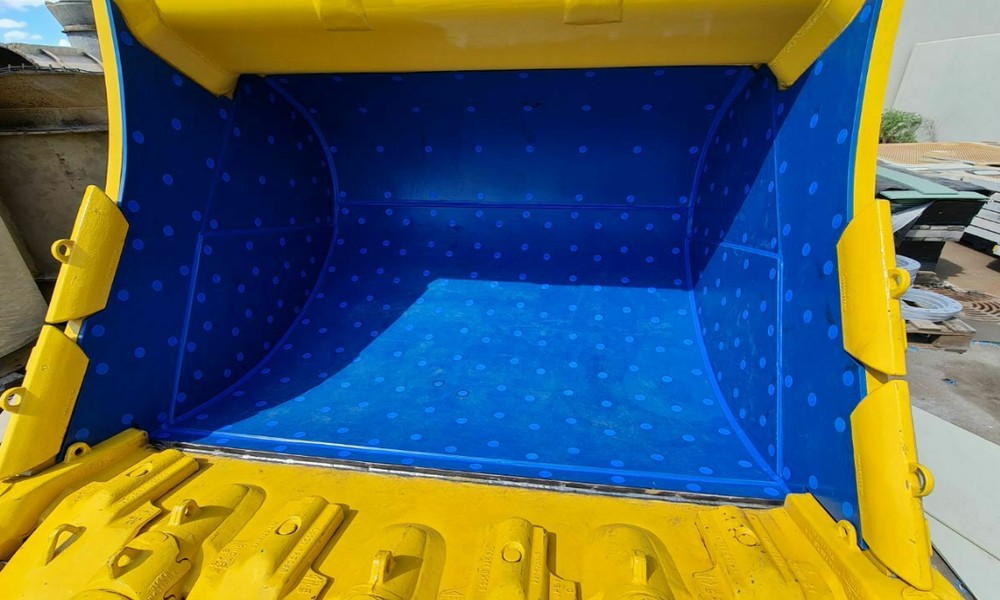
In sectors such as mining, quarrying, waste handling, and construction haulage, truck bodies face continuous abrasion from coarse, heavy, and often sticky materials. UHMWPE liners shield the steel surface from this mechanical stress, ensuring reduced wear, smoother discharge, and longer service life.
This article explores how UHMWPE’s exceptional wear and impact resistance make it one of the most effective and durable truck body liner materials for demanding Australian haulage operations.
Wear Resistance of UHMWPE Truck Body Liners
Wear resistance refers to a material’s ability to withstand friction, abrasion, and surface degradation over time. In high-load applications, constant contact between abrasive materials and the truck bed accelerates wear on unprotected steel. UHMWPE’s molecular composition consists of long polymer chains tightly bound together, which creates a tough, slick surface that resists gouging, scoring, and gradual thinning.
Compared with steel, aluminium, or rubber liners, UHMWPE exhibits a far lower wear rate and a proven track record in industrial haulage, delivering longer service life even under abrasive conditions.
In practical terms, this durability lowers maintenance frequency and replacement costs. Fleets benefit from predictable maintenance schedules, reduced downtime, and fewer disruptions to unloading or tipping cycles. This is a major advantage in operations where time and efficiency directly impact profitability.
Impact Resistance of UHMWPE Truck Body Liners
Impact resistance determines how well a liner absorbs energy from falling or shifting loads. Each time ore, gravel, or waste drops into a tipper, the liner must absorb and disperse that shock. UHMWPE’s ultra-long molecular structure gives it exceptional impact energy absorption, allowing it to flex slightly under stress without cracking, denting, or deforming.
Unlike steel liners, which can permanently deform, or rubber liners, which can tear under repeated impact, UHMWPE maintains its integrity over thousands of loading cycles. This is especially important in industries such as mining and quarrying, where oversized rocks or uneven loads can generate heavy point impacts.
Another advantage is UHMWPE’s ability to perform reliably across temperature variations. Whether operating in freezing mornings or the hot daytime conditions typical of Australian sites, its mechanical strength and toughness remain stable within its service range (approximately -40°C to 80°C). This consistency keeps truck bodies protected and reduces the need for panel repairs or body reinforcement.
Why UHMWPE Is the Best Truck Liner Material?
When evaluating liner materials, UHMWPE stands out as a well-balanced performer across all key metrics: wear resistance, impact resistance, friction, and service life.
- Compared to steel, UHMWPE does not rust, corrode, or require repainting. Its lower density reduces overall truck mass compared with heavy metals, contributing to more efficient load handling and fuel use.
- Compared to rubber, it provides far higher resistance to tearing and surface abrasion while maintaining a slick, anti-stick surface that promotes faster unloading.
- Compared to aluminium, UHMWPE offers superior toughness and flexibility, allowing it to absorb impacts without cracking or surface fatigue.
The liner’s low-friction surface also improves material flow. Sticky or cohesive loads such as wet clay, compost, or waste slide out cleanly, reducing the need for manual clearing or high tipping angles. This not only prevents vehicle damage but also enhances operator safety and cycle efficiency.
Beyond mechanical performance, UHMWPE is UV-stabilised and resistant to most corrosive agents, making it suitable for waste and recycling fleets dealing with variable or contaminated loads.
When considering wear resistance, impact strength, corrosion protection, and low maintenance, UHMWPE clearly delivers the best total cost of ownership among other liner materials.
The wear resistance and impact resistance of UHMWPE truck body liners make them a proven investment for heavy-duty haulage operations. They combine long-term protection, reduced downtime, and consistent unloading performance across Australia’s harshest environments.
With correct configuration and installation, UHMWPE liners not only extend the lifespan of steel truck bodies but also keep fleets operating efficiently, safely, and profitably.
If you’re assessing liner options for your fleet, explore UHMWPE configurations designed for superior wear and impact resistance. Solutions like OKUSLIDE® help ensure every load moves faster, cleaner, and with less wear on your equipment.